For a busy restaurant, time is one of the most valuable kitchen resources. Every minute spent peeling, sorting and preparing ingredients is time that could otherwise be used for cooking, plating and handling customer orders.
Garlic is a perfect example. A few cloves may take only seconds to peel, but when a restaurant uses several kilograms every day, repetitive garlic preparation can become a significant part of the kitchen workload.
This is where ready-to-cook peeled garlic can make a practical difference.
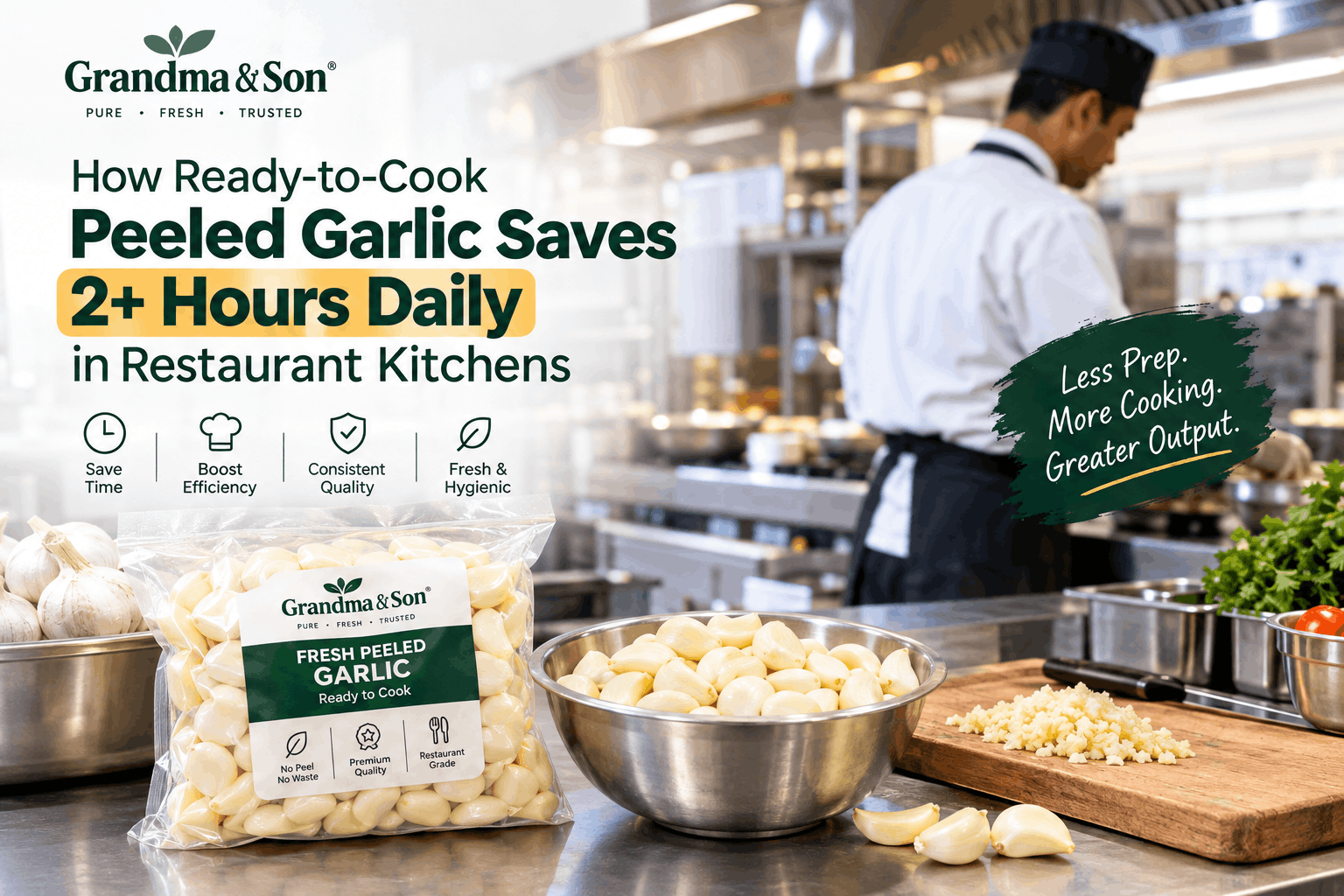
Depending on daily garlic consumption and the kitchen's workflow, replacing manual peeling with ready-to-use cloves can potentially save 2 or more labour hours per day in a high-volume operation. The exact saving will vary by restaurant, staff and preparation volume.
What Is Ready-to-Cook Peeled Garlic?
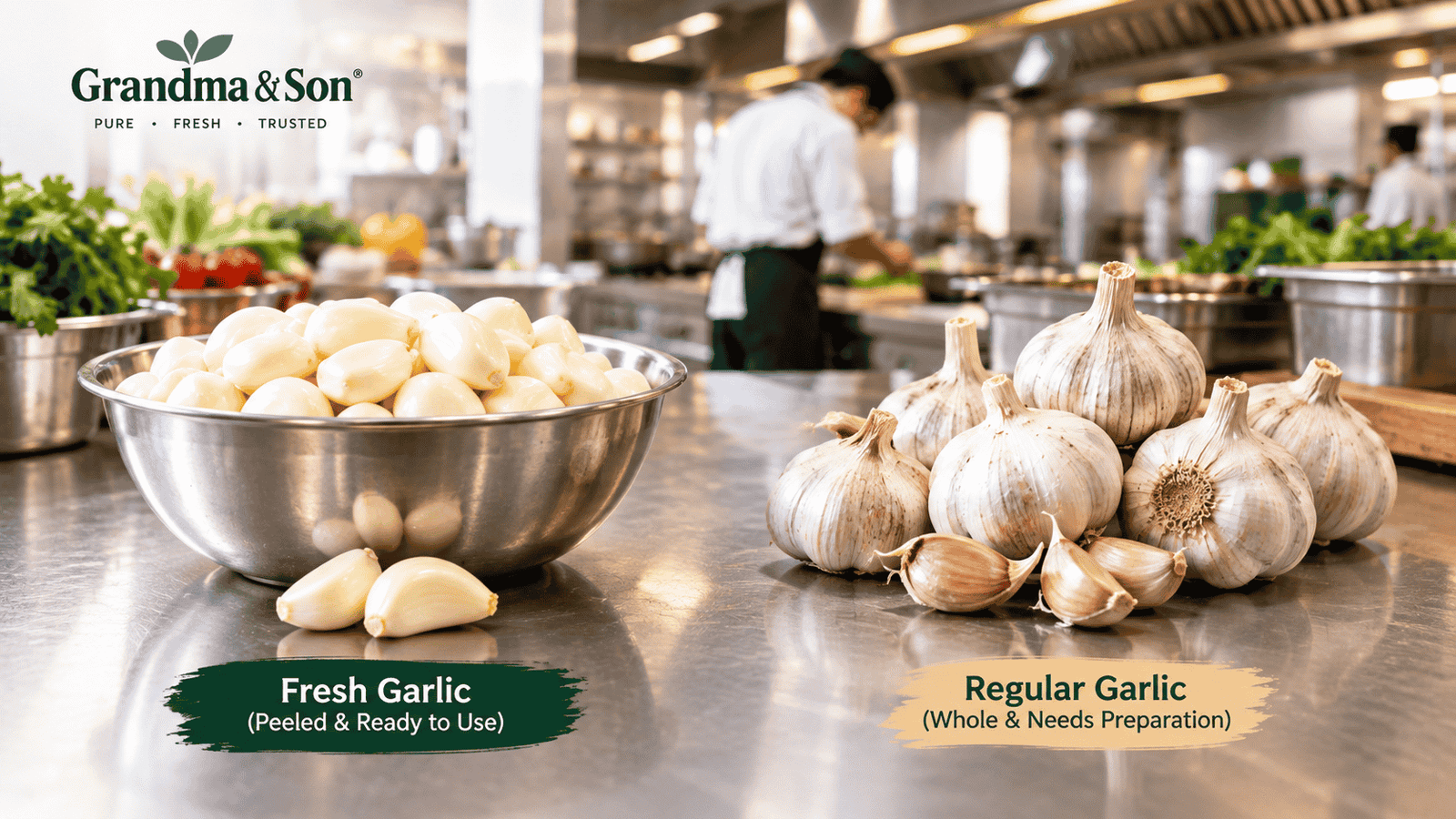
Ready-to-cook peeled garlic consists of garlic cloves that have already gone through the peeling and preparation stage, allowing kitchen staff to use them directly for chopping, mincing, grinding, blending or cooking.
Instead of starting with whole garlic bulbs, the chef can take the required quantity and move directly to the next preparation step.
That small change can remove a repetitive task from the daily kitchen routine.
Industry examples also highlight labour and workflow savings from using commercially prepared peeled garlic, particularly in restaurants and high-volume food operations.
How Can Peeled Garlic Save 2+ Hours a Day?
The biggest advantage is simple: your kitchen team does not have to spend time peeling every clove manually.
Consider a restaurant that uses garlic throughout the day for:
* Curries and gravies
* Tandoori marinades
* Garlic naan
* Chutneys and sauces
* Chinese and Indo-Chinese dishes
* Pickles and spice pastes
* Meat and seafood marinades
* Garlic butter and dressings
When these requirements are combined, garlic preparation can become a recurring task.
With ready-to-cook peeled garlic, the workflow becomes:
Whole garlic → peeling → sorting → preparation
instead of:
Peeled garlic → chop/mince/grind → cook
The time saved from removing the peeling stage can then be redirected toward actual food preparation and service.
5 Ways Peeled Garlic Improves Restaurant Kitchen Efficiency?
1. Less Repetitive Labour
Manual peeling requires someone to continuously handle garlic bulbs and separate the cloves from their skins.
Ready-to-use peeled garlic removes this repetitive stage, allowing kitchen staff to concentrate on higher-value preparation tasks.
2. Faster Mise en Place
Restaurant kitchens depend on proper mise en place—the preparation and organisation of ingredients before service.
Having peeled garlic ready in the refrigerator means chefs can quickly measure the required quantity and prepare it according to the recipe.
3. More Consistent Preparation
Manual peeling and trimming can vary between employees. Ready-to-use cloves provide a more consistent starting ingredient, which can make preparation easier to standardise across different shifts.
4. Reduced Preparation Waste
When garlic is peeled manually, skins and unnecessary trimming create additional waste.
Using prepared cloves can simplify portioning and help kitchens better track how much usable garlic they consume.
5. Better Peak-Hour Workflow
During lunch and dinner rushes, kitchen staff need to focus on cooking and order fulfilment.
Removing unnecessary preparation tasks before or during service can help keep the workflow organised and reduce bottlenecks.
Is Peeled Garlic Suitable for Restaurants, Hotels and Cloud Kitchens?
Yes, ready-to-cook peeled garlic can be useful for restaurants, hotels, caterers, dhabas, food manufacturers and cloud kitchens, especially where garlic is used in significant quantities.
For high-volume kitchens, the benefit is not simply convenience. It is about making ingredient preparation more predictable and reducing repetitive manual work.
However, businesses should select suppliers based on factors such as freshness, packaging, hygiene, storage requirements, delivery consistency and product quality rather than time savings alone.
FSSAI guidance emphasises food hygiene practices, proper storage, protection from contamination and appropriate handling of food materials.
How Should Restaurants Store Peeled Garlic?
Storage depends on the supplier's packaging and product specifications. Restaurants should always follow the supplier's storage instructions and applicable food-safety requirements.
Prepared food ingredients should be protected from contamination and stored under appropriate conditions. FSSAI materials specifically highlight hygienic storage, covered food-grade containers and temperature control where applicable.
For this reason, restaurants should check:
- Packaging integrity
- Product freshness
- Storage temperature
- Use-by or best-before information where applicable
- Supplier handling practices
- Delivery conditions
Why the Right Garlic Supplier Matters?
Saving kitchen time only works when the supply itself is reliable.
A restaurant ordering peeled garlic regularly should look for a supplier that can maintain consistent quality, dependable
quantities, hygienic packaging and predictable delivery schedules.
For businesses purchasing in bulk, it can also be useful to discuss daily consumption, preferred pack sizes and delivery frequency before establishing a recurring supply arrangement.
Conclusion
Restaurant kitchens are built around efficiency. While peeling garlic may appear to be a small task, repeating that task every day across large quantities can consume valuable labour time.
Ready-to-cook peeled garlic removes the peeling stage, helping kitchens move faster from ingredient storage to actual food preparation. In high-volume kitchens, the accumulated time saving can reach 2+ hours per day, although the actual result depends on garlic consumption and the existing preparation process.
For restaurants, hotels, caterers and cloud kitchens, the bigger opportunity is creating a smoother workflow: less repetitive preparation, faster mise en place and more time for cooking and service.
If your kitchen uses garlic every day, switching from whole bulbs to professionally prepared peeled cloves may be a simple operational change worth measuring.
Frequently Asked Questions
1. How much time can peeled garlic save a restaurant?
A high-volume kitchen may save 2+ hours of labour per day, but the actual saving depends on daily garlic usage, staff numbers and the existing peeling process.
2. Is peeled garlic ready to cook?
Yes. Properly prepared peeled garlic is designed to be used directly for chopping, mincing, grinding, blending or cooking, subject to the supplier's handling instructions.
3. Who should buy peeled garlic in bulk?
Restaurants, hotels, caterers, dhabas, cloud kitchens, food manufacturers and other commercial kitchens with regular garlic consumption can benefit from bulk supply.
4. Does peeled garlic reduce kitchen labour?
It can reduce the labour required for repetitive peeling and preparation, allowing kitchen staff to spend more time on cooking and service.
5. How should peeled garlic be stored?
Follow the supplier's stated storage instructions and applicable food-safety requirements. Proper refrigeration and protection from contamination may be required depending on the product and packaging.