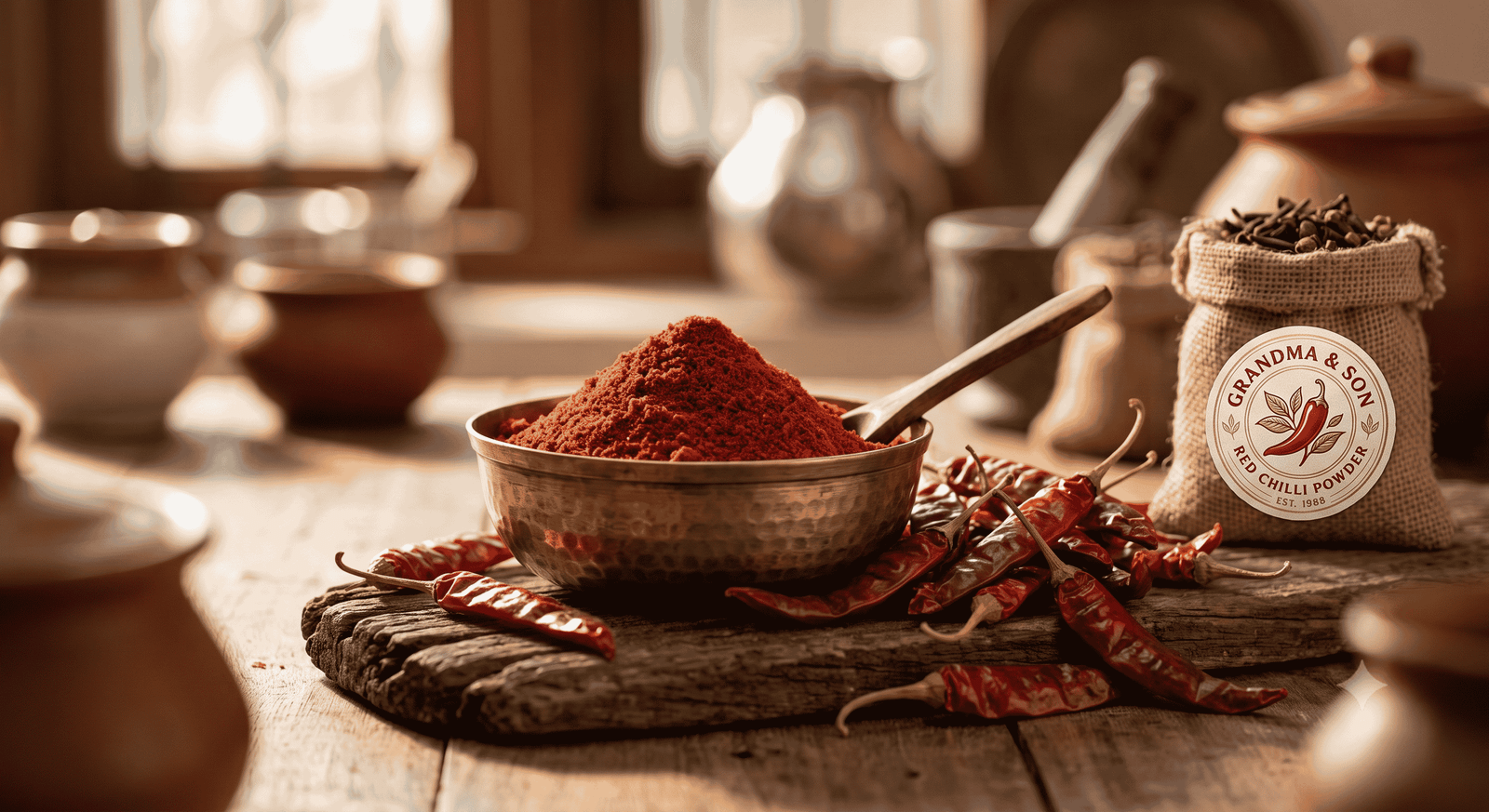
Red chilli powder is one of the most widely used spices in Indian kitchens. It adds colour, aroma and heat to dishes ranging from dal and sabzi to curries, marinades, chutneys and spice blends. But with so many options available, how do you choose the best red chilli powder for Indian cooking?
The answer is not simply about finding the reddest powder. Quality, aroma, ingredients, packaging and freshness all matter.
What Makes Good Red Chilli Powder?
Good chilli powder should have a characteristic chilli aroma, a clean appearance and a flavour suitable for the type of cooking you do.
Different chilli varieties can provide different combinations of colour and heat. Some are preferred when you want vibrant colour with comparatively moderate heat, while others are selected for stronger pungency.
Therefore, the "best" red chilli powder depends on your recipe and personal preference rather than colour alone.
5 Things to Check Before Buying Red Chilli Powder
1. Check the Ingredient Label
Look for a clear ingredient declaration and avoid products with unnecessary ingredients. FSSAI standards specify that chilli powder should be free from dirt, mould, insect infestation, extraneous colouring matter, flavouring matter and mineral oil.
2. Look at the Packaging
For packaged spices, check the manufacturer's details, batch information, dates and applicable food-safety information. FSSAI consumer guidance recommends preferring packaged foods carrying an FSSAI licence number when buying spices.
If you want to explore a chilli product for everyday Indian cooking, you can visit Grandma & Son Red Chilli.
3. Don't Judge Quality Only by Colour
An unusually bright red colour does not automatically mean better chilli powder. Natural chilli varieties can differ considerably in colour.
A better approach is to consider colour + aroma + ingredient information + packaging + freshness together.
4. Check Aroma and Freshness
Fresh chilli powder should have a recognizable chilli aroma. A stale, musty or unusual smell can be a warning sign.
Also check whether the powder appears excessively damp, clumped or contaminated. FSSAI's standards require chilli powder to be dry and free from mould and other contamination.
5. Consider Your Cooking Style
For everyday Indian cooking, you may want a balanced chilli powder that provides both colour and heat.
For dishes where colour is important, a milder, colour-focused chilli can be useful. For spicy curries and recipes where heat is central, a hotter variety may be more suitable.
How to Check Red Chilli Powder for Possible Artificial Colour
FSSAI's DART guidance provides a simple household screening test for artificial, water-soluble synthetic colours in chilli powder.
Sprinkle a small amount of chilli powder on the surface of water in a glass. According to the FSSAI demonstration, artificial colourants can begin descending through the water in visible colour streaks.
This is a screening test, not laboratory confirmation. If you have serious concerns about a food product, laboratory analysis is the appropriate way to establish compliance.
How to Store Red Chilli Powder
Even good chilli powder can lose quality if it is stored incorrectly.
Follow these simple tips:
- * Store it in an airtight container.
- * Keep it in a cool, dry cupboard.
- * Protect it from direct sunlight.
- * Keep moisture and cooking steam away.
- * Always use a clean, completely dry spoon.
- * Avoid buying unnecessarily large quantities if you use chilli powder slowly.
Proper storage helps preserve its aroma, colour and flavour for longer.
Why Quality Matters in Indian Cooking
The right chilli powder can make a noticeable difference to everyday cooking. It can provide the desired balance of colour, aroma and heat without overpowering the other ingredients.
FSSAI's current food-standards framework includes specific quality and safety requirements for spices and chilli products.
For product availability, bulk requirements or enquiries, you can contact Grandma & Son.
Conclusion
Choosing the best red chilli powder for Indian cooking starts with understanding what you actually need from the spice. Don't rely on colour alone. Check the ingredients, packaging, aroma, freshness and overall product information before buying.
For everyday Indian recipes, choose a chilli powder that gives you the right balance of colour, flavour and heat, and store it properly in an airtight container.
Frequently Asked Questions
1. How do I choose good red chilli powder?
Check the ingredient label, packaging, aroma, freshness and appearance. Avoid products showing signs of moisture, mould or contamination.
2. Does brighter red chilli powder mean better quality?
No. Colour can vary naturally between chilli varieties, so brightness alone is not a reliable measure of quality.
3. How can I check chilli powder for artificial colour at home?
FSSAI's DART guidance describes a water test in which artificial colourants may descend in visible colour streaks. It is only a preliminary screening method, not laboratory confirmation.
4. How should red chilli powder be stored?
Keep it in an airtight container in a cool, dry place away from sunlight, moisture and cooking steam.
5. Can red chilli powder be used in everyday Indian cooking?
Yes. It is commonly used in dals, vegetables, curries, marinades, chutneys, rice dishes and various Indian masala preparations.
6. Where can I find Grandma & Son red chilli?
You can explore the Grandma & Son Red Chilli page or use the contact section for enquiries.