Turmeric, commonly known as haldi, is one of the most important spices in Indian kitchens. Its bright golden colour, earthy aroma and warm flavour make it a regular ingredient in dals, sabzis, curries, rice dishes and marinades. But choosing good turmeric and storing it correctly is equally important if you want to preserve its freshness and flavour.
Whether you use turmeric powder every day or prefer whole turmeric fingers, understanding how to select and store haldi can help you get better results in everyday cooking.
How Is Turmeric Used in Indian Cooking?
Turmeric is used in many traditional Indian recipes, usually in small quantities. It adds a characteristic yellow-golden colour and earthy flavour to food.
Common uses of turmeric include:
- * Dal and lentils: A small amount of haldi gives dal its familiar golden colour.
- * Vegetable curries: Turmeric works well with potatoes, cauliflower, peas, beans and seasonal vegetables.
- * Rice dishes: It can be used in pulao, masala rice and other savoury preparations.
- * Marinades: Turmeric is commonly combined with spices, salt, ginger and garlic for marinating vegetables, paneer and other foods.
- Indian spice blends: Haldi is an important component of many traditional masala combinations.
For everyday cooking, the goal is balance. Too much turmeric can make a dish taste bitter or overpower the other spices.
Whole Turmeric vs Turmeric Powder?
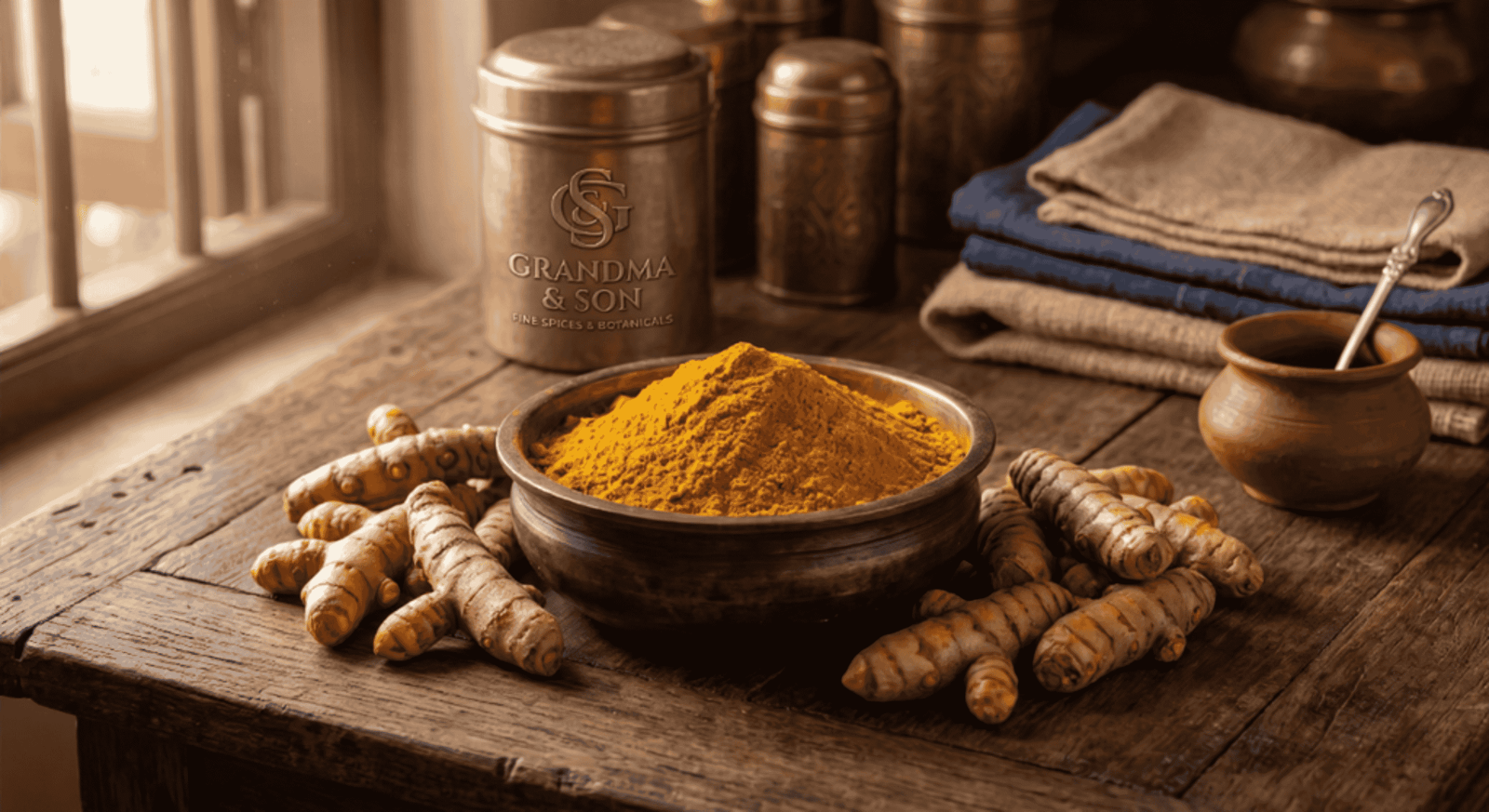
Whole dried turmeric fingers are the original form of the spice. FSSAI defines whole turmeric as the dried rhizomes of Curcuma longa L., while turmeric powder is produced by grinding dried turmeric rhizomes.
Whole turmeric can be useful when you want to grind it yourself, while turmeric powder is more convenient for everyday cooking.
If you are looking for fresh, quality turmeric for Indian cooking, you can explore Grandma & Son turmeric.
How to Choose Pure Turmeric?
Colour alone should not be the only way to judge turmeric. Very bright or unusually intense colour does not automatically mean better quality.
When buying packaged turmeric, check the product label, packaging condition, manufacturer information and applicable food-safety details. FSSAI also recommends preferring packaged spices with an FSSAI licence number when buying packaged food products.
FSSAI standards state that turmeric powder should be free from added colouring matter, including lead chromate, and specify quality parameters such as moisture, ash and curcuminoid content.
For a simple household check, FSSAI's DART guidance describes a water test: natural turmeric generally leaves a lighter yellow colour as it settles, while artificially coloured turmeric can release a stronger yellow colour into the water. This is only a basic screening method, not a substitute for laboratory testing.
How to Store Turmeric Properly?
Correct storage helps protect turmeric from moisture, contamination and loss of aroma.
Follow these simple tips:
- Keep turmeric in an airtight container.
- Store it in a cool, dry cupboard away from direct sunlight.
- Keep moisture away from turmeric powder because humidity can cause clumping.
- Always use a dry spoon when taking turmeric from the container.
- Avoid storing it near steam or the cooking stove.
- Buy practical quantities so the powder is used while its aroma and flavour remain fresh.
If you purchase turmeric in bulk, divide it into smaller airtight containers rather than repeatedly opening one large container.
Why Quality Matters in Everyday Cooking?
Good turmeric should have a characteristic aroma and flavour and should be free from mustiness, mould and visible contamination. FSSAI's standards also specify limits for moisture and other quality parameters for turmeric products.
This matters because turmeric is not simply about adding colour. Fresh, properly stored turmeric contributes its natural aroma and earthy flavour to the overall dish.
For wholesale enquiries, fresh turmeric requirements or product availability, you can contact Grandma & Son.
Conclusion
Turmeric remains a simple but essential ingredient in Indian cooking. From dal and sabzi to rice and marinades, the right amount of haldi can add colour and characteristic flavour to everyday meals. Choosing quality turmeric, checking the packaging and storing it away from moisture can help maintain its freshness for longer.
For the best results, focus on quality, proper storage and moderate use rather than relying on colour alone.
Frequently Asked Questions
1. What is turmeric commonly used for in Indian cooking?
Turmeric is commonly used in dal, curries, vegetables, rice dishes, marinades and various Indian masalas.
2. How should turmeric powder be stored?
Store turmeric powder in a clean, airtight container in a cool, dry place away from sunlight, moisture and cooking steam.
3. How can I choose good turmeric powder?
Check the packaging, label and food-safety information. Look for a natural characteristic aroma and avoid products with unusual odours or signs of moisture or contamination.
4. Can turmeric powder be checked for artificial colour at home?
FSSAI's DART guidance describes a simple water-based screening test for artificial colour in turmeric. However, a home test cannot replace proper laboratory analysis.
5. Where can I buy turmeric from Grandma & Son?
You can explore the Grandma & Son turmeric range or use the turmeric contact section for enquiries.